
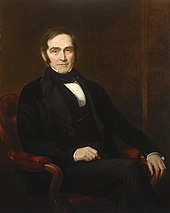
Josephine Grey was born on 13 April 1828 at Milfield, Northumberland. She was the fourth daughter and seventh child of Hannah (née Annett) and John Grey, a land agent and agricultural expert, who was a cousin of the reformist British Prime Minister, Lord Grey. In 1833 John was appointed manager of the Greenwich Hospital Estates in Dilston, near Corbridge, Northumberland, and the family moved to the area, where John acted as Lord Grey's chief political agent in Northumberland.In this role John promoted his cousin's political opinions locally, including support for Catholic emancipation, the abolition of slavery, the repeal of the Corn Laws and reform of the poor laws.Josephine was taught at home before completing her schooling at a boarding school in Newcastle upon Tyne which she attended for two years.
John treated his children equally within the home. He educated them in politics and social issues and exposed them to various politically important visitors.John's political work and ideology had a strong influence on Josephine, as did the religious teaching she received from her mother; the family background and the circles in which she moved formed a strong social conscience and a staunch religious faith.
At about the age of 17 Josephine went through a religious crisis, which probably stemmed from an incident in which she discovered the body of a suicide while out riding. She became disenchanted with her weekly church attendance, describing the local vicar as "an honest man in the pulpit ... [who] taught us loyally all that he probably himself knew about God, but whose words did not even touch the fringe of my soul's deep discontent". Following her crisis, Josephine did not identify with any single strand of Christianity, and remained critical of the Anglican church.She later wrote that she "imbibed from childhood the widest ideas of vital Christianity, only it was Christianity. I have not much sympathy with the Church". She began to speak directly to God in her prayers:
In the summer of 1847 Josephine visited her brother in County Laois, Ireland. It was at the height of the Great Famine and the first time she had come into contact with widespread suffering among the poor; she was deeply affected by her experiences[16][17] and later recalled that "As a young girl, I had no conception of the full meaning of the misery I saw around me, yet it printed itself upon my brain and memory.
0 Response to "Early life; 1828–50"
Post a Comment